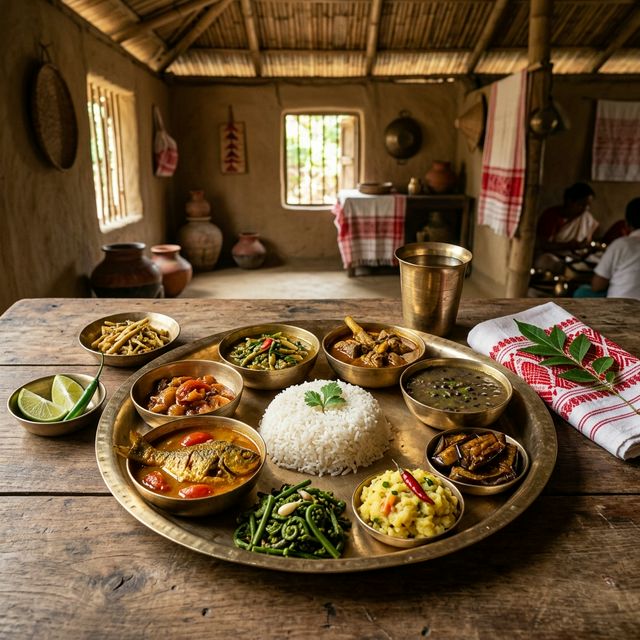
What is "Khaar Khuwa"?
"Khaar Khuwa" literally means "one who eats khar".
But culturally, it represents much more: it is the indigenous Assamese identity, a symbol of simplicity and resilience, and our timeless traditional food heritage.
Khar → alkaline dish made from banana ash
Khuwa → to eat
👉 Today, it is proudly used to refer to native Assamese people. Read more about its meaning.
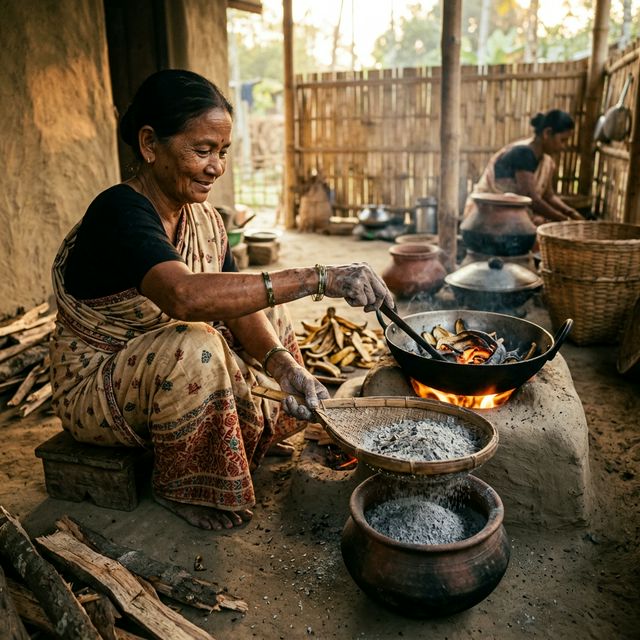
From ash to identity
The Soul of Assamese Food: Khar
Khar is unique to Assam cuisine. Made from banana peel ash (bheem kol), it is always served at the start of a meal.
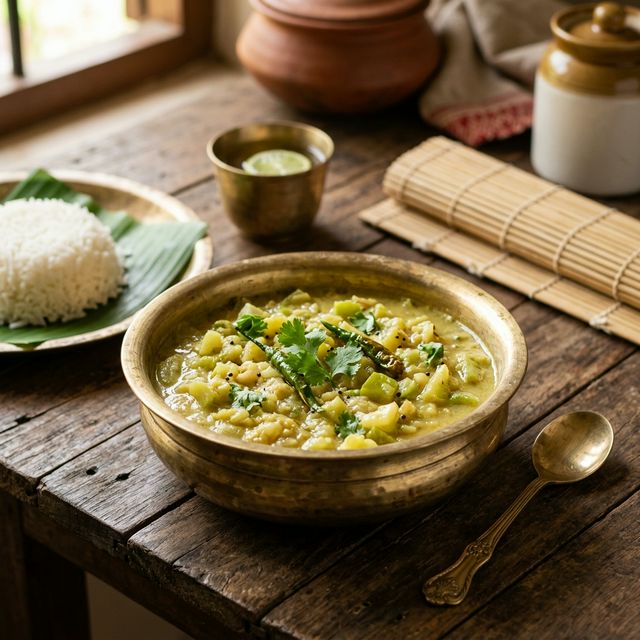
Omita Khar (Papaya Khar)
A classic, savory dish made from raw papaya and alkaline banana ash extract.
View Recipe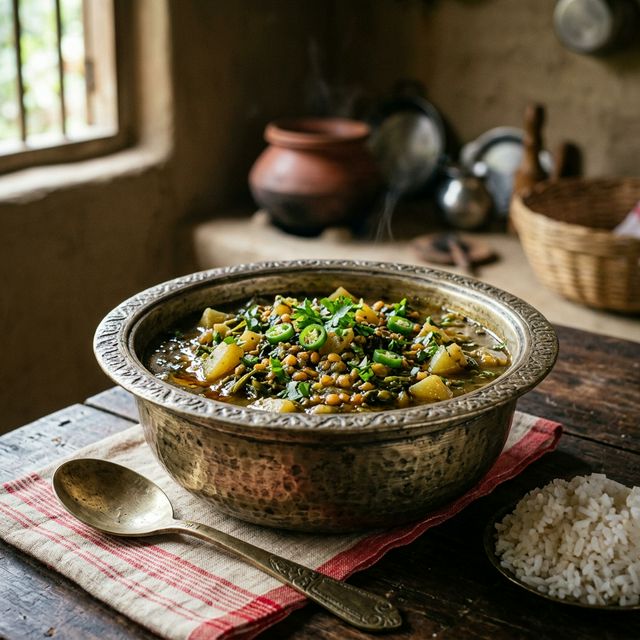
Served in Kanh Utensils
Traditionally served in bell-metal (Kanh) vessels, which enhances the meal experience.
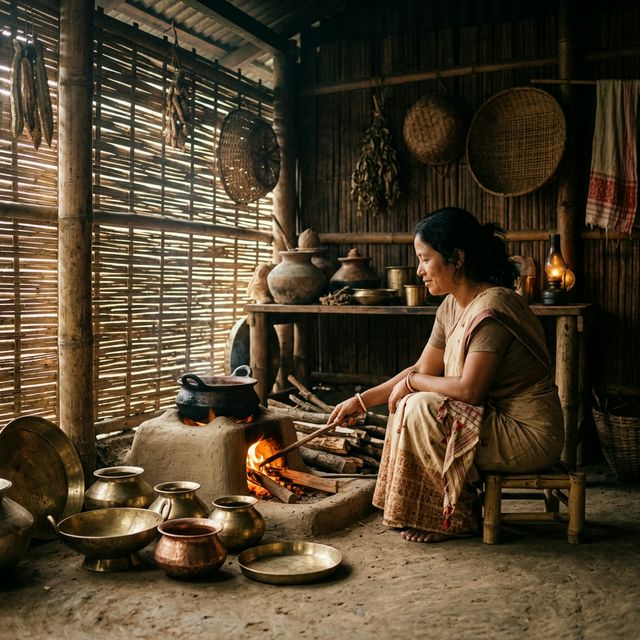
The Authentic Source
Khar represents our deep connection to sustainable, agrarian village kitchens.
History & Science Behind It
In medieval Assam, salt was extremely rare and expensive; only the elites could afford it. Common people cleverly used 'khar' as a substitute.
"Lun (salt) was equal to gold" is a popular Assamese saying.
From a scientific view, Assam has high humidity and acidic soil. Khar naturally helps balance acidity in food and aids digestion.
Explore the HistoryVoices of the People
Earlier used in a slightly class-based context, it is today a bold badge of pride representing unity among Assamese people.
"I am Khaar Khuwa Axomiya — rooted, resilient, real."
Experience the Culture
Discover recipes, Assamese word dictionaries, and more.